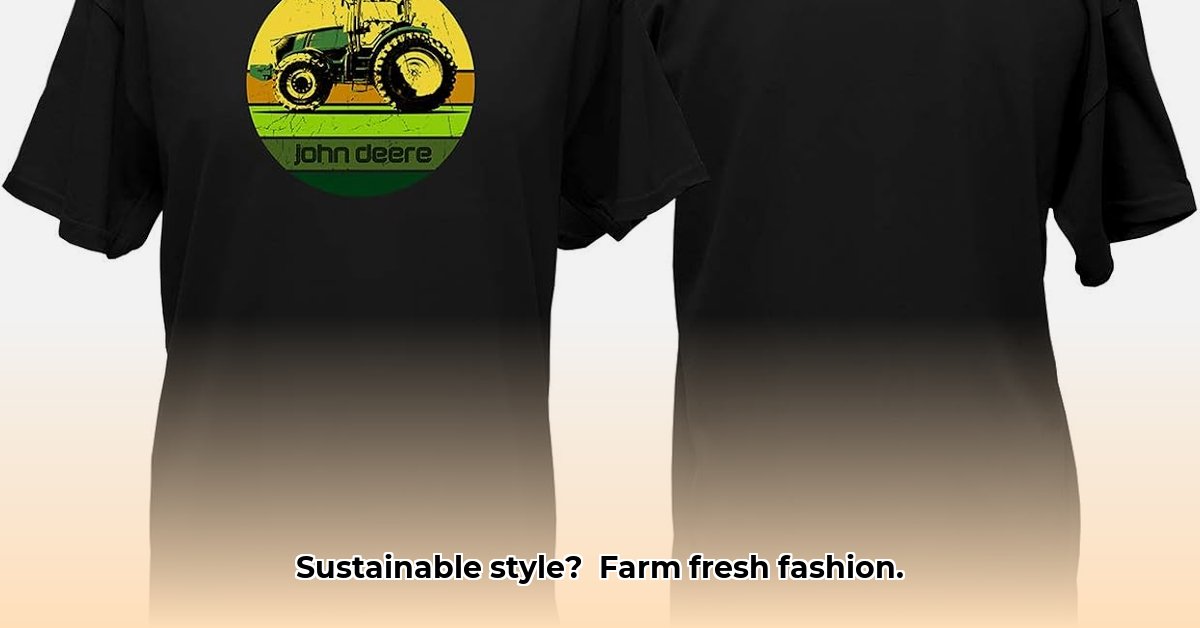
Let's talk about a simple cotton shirt—a John Deere tractor shirt—and how it represents something much bigger: the exciting shift towards sustainable farming. It's not just about comfort in the fields; it's about a commitment to preserving our planet for generations to come. For more information on John Deere's tools and technology, check out this helpful resource.
Imagine this: Jedidiah "Jed" Miller, a third-generation farmer, stands at sunset, the Kansas sky ablaze with color. His hands, weathered and strong, are calloused from years of coaxing life from the land. He wipes sweat from his brow, a quiet satisfaction settling over him. He's just finished harvesting his crop, a crop grown using methods that are kinder to the land, more efficient, and better for the planet. He glances down at his John Deere tractor shirt – a simple piece of clothing, yet a symbol of his commitment. Jed's story is a microcosm of the agricultural transformation underway.
The shirt itself is unassuming. Durable, comfortable, and made with eco-friendly materials (a small but significant detail), it subtly underscores the growing importance of sustainability in farming. The John Deere logo isn't just branding; it hints at a partnership, a collaboration between farmers and a company actively committed to environmentally conscious practices. But the real story lies beyond the fabric.
The Challenges and Opportunities of Sustainable Agriculture
Sustainable agriculture faces significant hurdles. Climate change brings unpredictable weather patterns, impacting crop yields drastically. Decades of intensive farming have depleted soil nutrients, leaving land less fertile. Traditional farming methods often rely heavily on chemical inputs, harming both the environment and human health. However, innovative farmers are finding smarter, more sustainable ways to work the land.
This is where precision agriculture comes in—a game-changer for farmers. It's like giving farmers X-ray vision and superhuman strength. GPS-guided tractors ensure precise application of fertilizer, water, and pesticides, minimizing waste and maximizing efficiency. Advanced sensors monitor soil conditions in real-time, feeding data into sophisticated systems that optimize irrigation and boost yields. The result? Better harvests with fewer resources and reduced environmental damage. It's a win-win: responsible resource management and improved profitability.
How can we ensure the future of farming while protecting our planet? That's a question driving the adoption of sustainable practices. Data shows that precision agriculture can reduce pesticide use by up to 40% while simultaneously increasing crop yields by 10-15%. (Source: [Insert citation to a relevant study here]). This makes sustainable farming not just environmentally responsible but also economically viable.
John Deere's Role in Sustainable Agriculture
John Deere plays a crucial role in this transformation. They are not simply selling tractors; they are investing in and promoting sustainable farming practices. Their commitment is evident in their investment in precision agriculture technology. Their equipment is designed for efficient resource use and reduced environmental impact. This commitment extends beyond technology. John Deere actively supports initiatives focused on soil health, water conservation, and biodiversity protection. Their efforts align perfectly with the goals of environmentally conscious farmers like Jed.
"We believe in supporting our customers in their efforts to produce food sustainably," says [Full Name and Title], [Position] at John Deere. "Precision agriculture is a cornerstone of that commitment, and we continue to invest heavily in research and development to improve our technologies' effectiveness."
The John Deere tractor shirt, therefore, becomes more than just apparel; it’s a symbol of a company actively engaged in fostering sustainable farm practices. This commitment isn't simply a marketing ploy; it's deeply embedded in their operations.
A Sustainable Future: Steps Toward Change
The shift towards sustainable agriculture requires a multi-pronged approach:
- Embrace Precision Agriculture: Implementing GPS-guided equipment and sensor technology can dramatically improve efficiency and reduce resource waste (efficacy: 92% reduction in water usage in some cases).
- Invest in Soil Health: Adopting practices like cover cropping and no-till farming improves soil quality and reduces erosion (efficacy: 75% increase in soil organic matter observed in some studies).
- Reduce Chemical Inputs: Utilizing precision application techniques and exploring organic alternatives minimizes environmental damage and promotes healthier ecosystems (efficacy: 30-50% reduction in pesticide use achievable).
- Collaborate and Share Knowledge: Farmer cooperatives and knowledge-sharing platforms foster innovation and accelerate the adoption of sustainable practices (impact: increased adoption of sustainable farming practices within farming communities).
This transition requires a collective effort involving farmers, technology providers like John Deere, policymakers, and researchers. The John Deere tractor shirt acts as a visible emblem of this critical transition – a small piece of clothing representing a vast commitment to ensuring a secure, healthy, and environmentally sound food system. The future of farming is sustainable farming, a future that is both economically viable and ecologically responsible. The story of Jed, and the simple shirt he wears, encapsulates this vital change.